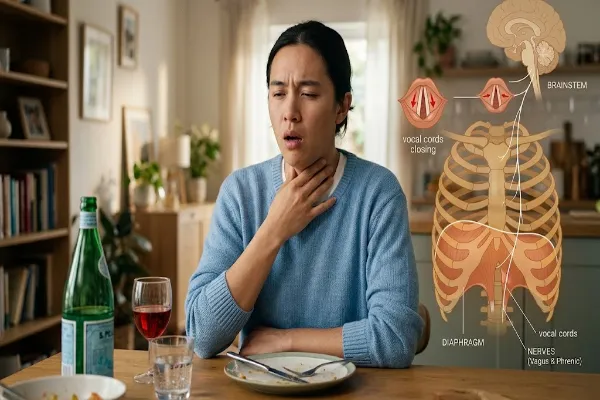
Hiccups are one of those strange little things the human body does that can appear without warning. One moment you are eating, talking, laughing, or simply sitting quietly, and the next you hear the familiar “hic” that seems impossible to control.
Most hiccups are harmless and disappear on their own within a few minutes. Nevertheless, they can be surprisingly annoying, especially when they continue for a long time or repeatedly return. This has led to countless home remedies, from drinking cold water and holding your breath to swallowing sugar or trying to frighten someone.
But why do hiccups happen in the first place? And which methods actually help stop them?
The answer begins with understanding that a hiccup is not simply a problem in the stomach. It is a brief involuntary reflex involving the diaphragm, nerves, breathing muscles, and brain.
What Exactly Is a Hiccup?
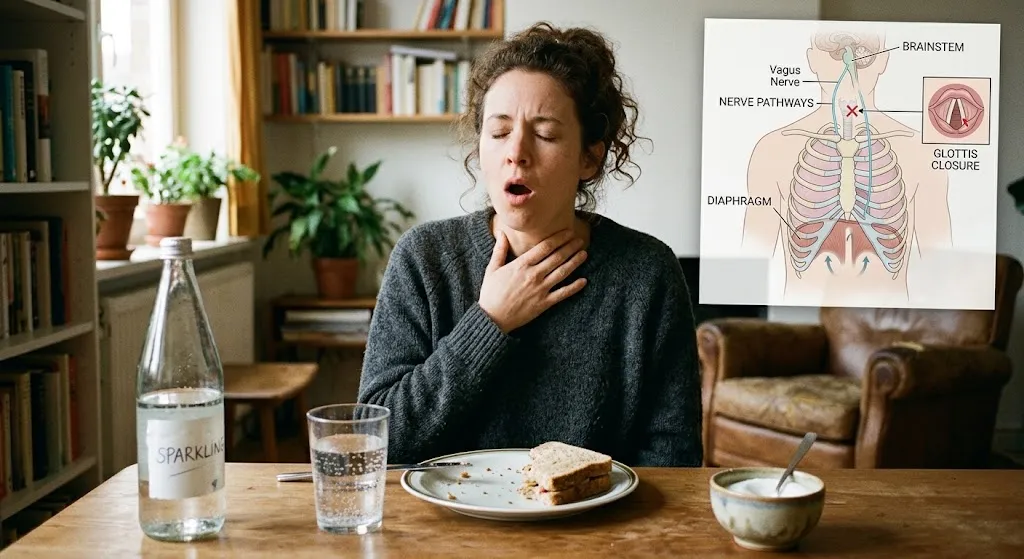
A hiccup is an involuntary contraction of the diaphragm followed almost immediately by the sudden closure of the vocal cords.
The diaphragm is the large muscle located beneath the lungs. It plays a central role in breathing. When the diaphragm contracts, it moves downward and helps draw air into the lungs. When it relaxes, air can move back out.
During a hiccup, however, the diaphragm suddenly contracts when you are not consciously trying to take a breath. The rapid movement of air into the lungs is followed by the closure of the glottis, the opening between the vocal cords.
That sudden closure produces the characteristic “hic” sound.
The entire event usually lasts only a fraction of a second, but repeated contractions can produce a series of hiccups.
In medical terminology, hiccups are called singultus.
Why Do Hiccups Happen?
Hiccups occur when the normal breathing reflex is temporarily disrupted or stimulated.
Several nerves are involved in this reflex, particularly the phrenic nerves, which control the diaphragm, and the vagus nerve, which carries signals between the brain and many organs throughout the body.
The brainstem also plays an important role in coordinating the reflex.
When something irritates or stimulates the relevant nerves, the diaphragm can contract suddenly. The result is a hiccup.
The interesting thing is that there is not always one obvious cause. Sometimes a person can identify exactly what triggered the hiccups. Other times they seem to appear for no apparent reason.
Common Things That Trigger Hiccups
Most short-lived hiccup episodes have ordinary triggers.
Eating Too Quickly
Eating rapidly can cause you to swallow more air. A distended stomach may stimulate nerves involved in the hiccup reflex.
This is one reason people sometimes develop hiccups after a large meal.
Eating Too Much
A very full stomach can press against the diaphragm and may contribute to hiccups.
Large meals are particularly likely to cause problems when combined with other triggers such as carbonated drinks or alcohol.
Carbonated Drinks
Fizzy drinks introduce gas into the digestive system. The resulting stomach expansion can stimulate the nerves involved in the hiccup reflex.
Drinking large amounts quickly may make this more likely.
Alcohol
Alcohol can irritate the digestive system and may influence the nervous system. Drinking alcohol, particularly in larger amounts, is a well-known trigger for temporary hiccups.
Sudden Temperature Changes
Moving quickly between very hot and very cold foods or drinks may stimulate nerves in the throat or digestive tract.
For some people, this can trigger a hiccup episode.
Laughing or Excitement
Strong emotions can alter breathing patterns. Laughing, excitement, surprise, anxiety, or crying can all temporarily change the rhythm of breathing.
Sometimes that change is enough to trigger hiccups.
Swallowing Air
Chewing gum, eating quickly, drinking through a straw, smoking, or talking while eating can increase the amount of air swallowed.
The additional air may contribute to stomach distension and irritation of the hiccup reflex.
Why Do Hiccups Sometimes Seem Completely Random?
The nervous system involved in hiccups is complicated, and the precise trigger is not always obvious.
A person may eat a normal meal, drink nothing unusual, and suddenly develop hiccups.
This does not necessarily mean that something is wrong.
In many cases, the reflex simply becomes temporarily activated and then settles down naturally.
That is why trying to identify a single cause for every episode can be difficult.
What Actually Stops Hiccups?
There is no single guaranteed cure for ordinary hiccups.
Most episodes stop spontaneously, and many traditional remedies work by interrupting or altering the breathing and swallowing patterns involved in the reflex.
Some methods have a reasonable physiological explanation even though scientific evidence for individual home remedies is limited.
Hold Your Breath Briefly
One of the most commonly recommended techniques is to hold your breath for a short period.
Holding the breath increases carbon dioxide levels in the blood and temporarily changes the normal breathing pattern. This may help interrupt the hiccup reflex.
The key is to keep it gentle.
There is no need to hold your breath for an uncomfortable or dangerous length of time.
Take a normal breath, hold it briefly, and then breathe normally again.
Sip Cold Water Slowly
Slowly drinking cold water can change the pattern of swallowing and breathing and may stimulate nerves in the throat.
Some people find that taking several small, controlled sips works better than drinking a large amount quickly.
The goal is not to overwhelm the stomach but to interrupt the reflex.
Swallow a Small Amount of Sugar
Another traditional technique involves swallowing a small amount of granulated sugar.
The texture of the sugar may stimulate nerves in the mouth and throat and alter the swallowing reflex.
Although this remedy is frequently recommended, evidence is not strong enough to say that it reliably stops hiccups in everyone.
It is better regarded as a harmless traditional technique for most adults rather than a proven treatment.
Breathe Slowly and Deliberately
Sometimes the simplest approach is to stop trying to fight the hiccup and deliberately slow your breathing.
Take gentle breaths through the nose and exhale slowly.
This can help restore a regular breathing rhythm, particularly when hiccups began after laughing, excitement, anxiety, or rapid breathing.
Pull Your Knees Toward Your Chest
Bringing the knees toward the chest while sitting or lying down can temporarily change the position of the diaphragm and abdominal organs.
Some people find that holding this position briefly helps interrupt hiccups.
As with many traditional remedies, however, it does not work universally.
What About Drinking Water Upside Down?
The familiar trick of drinking water while bending over or drinking from the opposite side of a glass is popular, but there is nothing magical about the position.
If it works, it is probably because the unusual swallowing and breathing pattern temporarily interrupts the hiccup reflex.
However, it can also increase the risk of choking or spilling the drink.
There is therefore little reason to consider it superior to simply drinking water normally and slowly.
Does Getting Scared Stop Hiccups?
Being frightened is another classic hiccup remedy.
A sudden surprise can cause a dramatic change in breathing and nervous-system activity. In theory, this may interrupt the hiccup reflex.
However, deliberately frightening someone is not a reliable medical treatment.
It can also be unpleasant, particularly for older adults or people with heart or neurological conditions.
There are safer ways to change the breathing pattern.
Does Holding Your Breath Really Work?
It can sometimes help, but it is not guaranteed.
The idea behind breath-holding is more than simply “stopping the hiccup.” Changing the concentration of carbon dioxide in the blood and altering the breathing cycle may affect the neural reflex responsible for the contractions.
A short breath hold is generally reasonable for a healthy adult, but there is no benefit in forcing yourself to hold your breath for a long time.
If you become dizzy or uncomfortable, breathe normally.
Why Do Hiccups Usually Go Away by Themselves?
The hiccup reflex is normally temporary.
Whatever irritated the nerves or disrupted the breathing pattern eventually settles, allowing the diaphragm to return to its normal rhythm.
This explains why many people find that the hiccups disappear almost as suddenly as they began.
In other words, the body often solves the problem without any special treatment.
Home remedies may simply help interrupt the process sooner—or the hiccups may have stopped naturally at about the same time.
Are Hiccups Dangerous?
Ordinary hiccups are almost always harmless.
A short episode lasting a few minutes is generally not something to worry about.
The situation changes when hiccups become unusually persistent.
Medical professionals generally distinguish between:
- Acute hiccups: lasting less than 48 hours
- Persistent hiccups: lasting more than 48 hours
- Intractable hiccups: continuing for a month or longer
Persistent or intractable hiccups are uncommon and deserve medical attention because they can sometimes be associated with an underlying medical condition.
What Can Cause Long-Lasting Hiccups?
When hiccups continue for days rather than minutes or hours, doctors may investigate a much broader range of possible causes.
These can include irritation of the nerves controlling the diaphragm, disorders affecting the central nervous system, metabolic problems, gastrointestinal conditions, certain medications, and other illnesses.
Persistent hiccups may also interfere with sleep, eating, drinking, speaking, and normal daily activities.
In these situations, treating the underlying cause is more important than repeatedly trying home remedies.
When Should You See a Doctor?
Occasional hiccups do not usually require medical attention.

However, it is sensible to contact a healthcare professional if hiccups:
- Continue for more than 48 hours
- Keep returning without an obvious reason
- Interfere with eating or drinking
- Prevent normal sleep
- Make breathing difficult
- Cause significant exhaustion
- Occur together with other concerning symptoms
Hiccups accompanied by severe chest pain, difficulty breathing, confusion, weakness, severe headache, or other sudden neurological symptoms should not simply be treated as an ordinary hiccup episode. Such symptoms require prompt medical evaluation.
Can Hiccups Be Prevented?
Not every episode can be prevented, but reducing common triggers may lower the chance of developing them.
Try eating more slowly and avoiding very large meals.
Limit carbonated drinks if they consistently trigger hiccups.
Avoid swallowing large amounts of air while eating or drinking.
If alcohol reliably causes hiccups, reducing or avoiding it may help.
It can also be useful to notice your personal pattern. Some people repeatedly develop hiccups after a particular food, drink, temperature change, or eating habit.
Keeping track of those triggers can be more useful than relying on a collection of random remedies.
Why Do Babies Get Hiccups So Often?
Babies frequently experience hiccups, particularly after feeding.
Their developing nervous and digestive systems may make the hiccup reflex easier to trigger. A baby’s diaphragm can contract suddenly after feeding, swallowing air, or changes in stomach fullness.
In most healthy babies, hiccups are normal and harmless.
Parents generally do not need to use adult hiccup tricks such as breath-holding or giving water. Babies should not be given water simply to stop hiccups unless advised by a healthcare professional.
Usually, the best approach is simply to allow the episode to pass.
Can Hiccups Be a Sign of a Digestive Problem?
Sometimes.
A temporary episode after a large meal is not usually concerning. However, frequent or persistent hiccups can occasionally occur alongside gastrointestinal problems.
The stomach, esophagus, diaphragm, and the nerves connecting these structures are closely linked.
Conditions that cause irritation, inflammation, reflux, or significant stomach distension may therefore contribute to recurrent hiccups.
If hiccups repeatedly occur together with symptoms such as persistent heartburn, difficulty swallowing, vomiting, abdominal pain, or unexplained weight loss, it is worth discussing the combination with a doctor.
What About Reflux?
Acid reflux can irritate structures in the upper digestive tract and may contribute to hiccups in some people.
This does not mean that every bout of hiccups is caused by reflux.
Occasional hiccups after eating are common, while persistent hiccups combined with frequent reflux symptoms deserve further evaluation.
Treating the underlying digestive problem may help when reflux is contributing to the episodes.
Do Hiccups Have an Evolutionary Purpose?
Scientists have proposed several theories about why humans have a hiccup reflex at all.

One interesting theory is that hiccups may be an evolutionary remnant of older breathing mechanisms.
Another possibility is that hiccups have some relationship to feeding and swallowing, particularly early in life.
However, there is no universally accepted explanation for why the human body retains the hiccup reflex.
What is clear is that hiccups involve a coordinated neurological reflex rather than simply random movement of the diaphragm.
Why Can’t We Simply Control the Diaphragm?
Although breathing can be controlled consciously, the diaphragm is also regulated automatically by the nervous system.
You can deliberately take a deep breath or hold your breath for a short time, but you cannot normally control every contraction of the diaphragm independently.
Hiccups occur when the automatic reflex temporarily overrides the normal rhythm of breathing.
That is also why telling yourself to “just stop hiccuping” rarely works.
The Best Approach to an Ordinary Hiccup Episode
For a typical episode, there is no need to try ten different remedies at once.
A simple sequence is usually enough:
1. Stop eating or drinking for a moment.
Give your breathing and swallowing pattern a chance to settle.
2. Breathe slowly.
Take calm, controlled breaths rather than repeatedly gasping.
3. Try a short breath hold.
Hold your breath briefly, then return to normal breathing.
4. Sip cool water.
Drink slowly rather than swallowing a large amount at once.
5. Wait.
If the hiccups are harmless and short-lived, they will often disappear naturally.
The important point is that there is no prize for using the most dramatic remedy. A gentle method that interrupts the reflex is preferable to an uncomfortable or potentially dangerous trick.
What You Should Not Do
Some internet remedies are much more extreme than necessary.
Do not deliberately choke yourself, swallow large quantities of water rapidly, hold your breath until you become dizzy, or use dangerous substances to try to stop hiccups.
Do not intentionally frighten someone in a way that could cause them to fall or become injured.
And if hiccups have continued for an unusually long time, do not keep experimenting with home remedies while ignoring the possibility of an underlying medical problem.
The Bottom Line
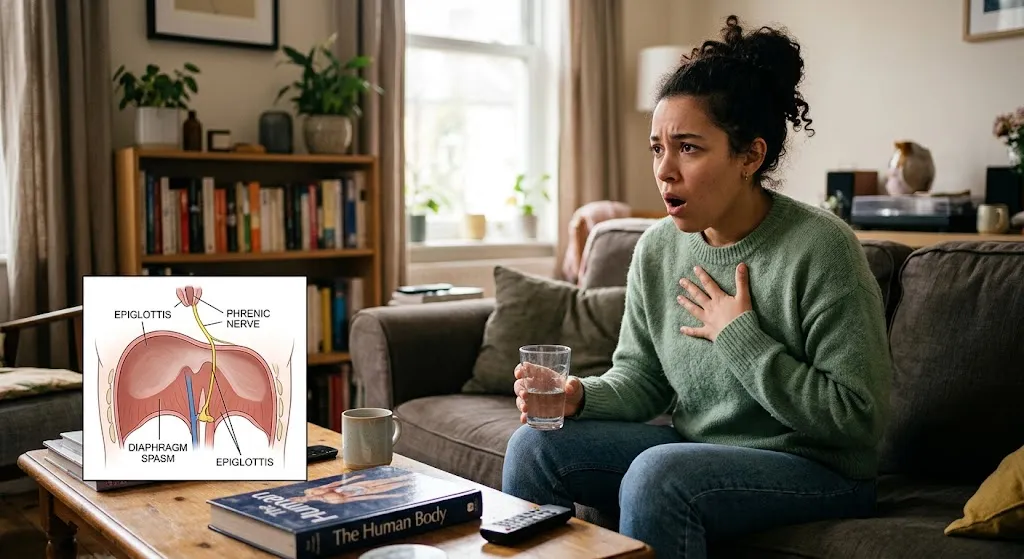
Hiccups happen because of a temporary involuntary reflex involving the diaphragm, nerves, breathing muscles, and brain.
Common triggers include eating too quickly or too much, swallowing air, carbonated drinks, alcohol, sudden temperature changes, laughter, and emotional excitement.
For ordinary hiccups, simple techniques such as brief breath-holding, slow controlled breathing, and slowly sipping cold water may help interrupt the reflex. None is guaranteed to work every time, and many episodes stop naturally anyway.
The important distinction is between an ordinary hiccup episode and persistent hiccups. If hiccups continue for more than 48 hours, repeatedly interfere with eating or sleeping, or occur alongside other concerning symptoms, medical evaluation is appropriate.
Most of the time, however, the humble hiccup is simply a brief neurological and respiratory misfire—annoying, sometimes mysterious, but usually harmless.
For more useful information, health-related insights, and helpful resources, visit serdpestcp.org.