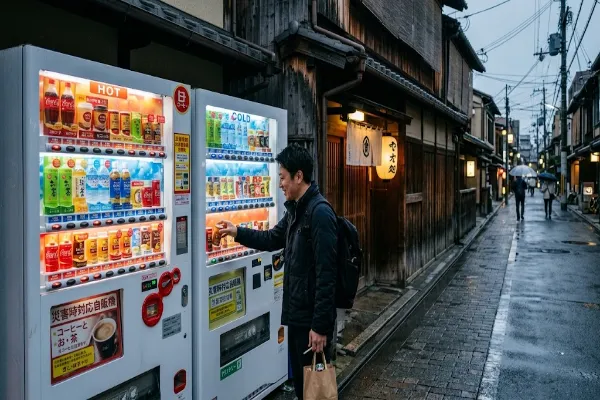
Japan has so many vending machines because they offer a convenient, affordable, and efficient way to buy drinks, snacks, and everyday essentials at almost any time of day. Their popularity is supported by Japan’s advanced vending technology, reliable distribution networks, dense urban areas, relatively secure public spaces, and strong consumer demand for convenience. Over decades, vending machines have become an integral part of Japanese daily life, serving both busy cities and rural communities.
Japan is famous for its advanced technology, efficient public transportation, delicious food, and unique everyday conveniences. Among the most recognizable features of Japanese life is the extraordinary number of vending machines found throughout the country. They stand on busy city streets, outside train stations, beside quiet country roads, near temples, and even in places where few people seem to pass by.
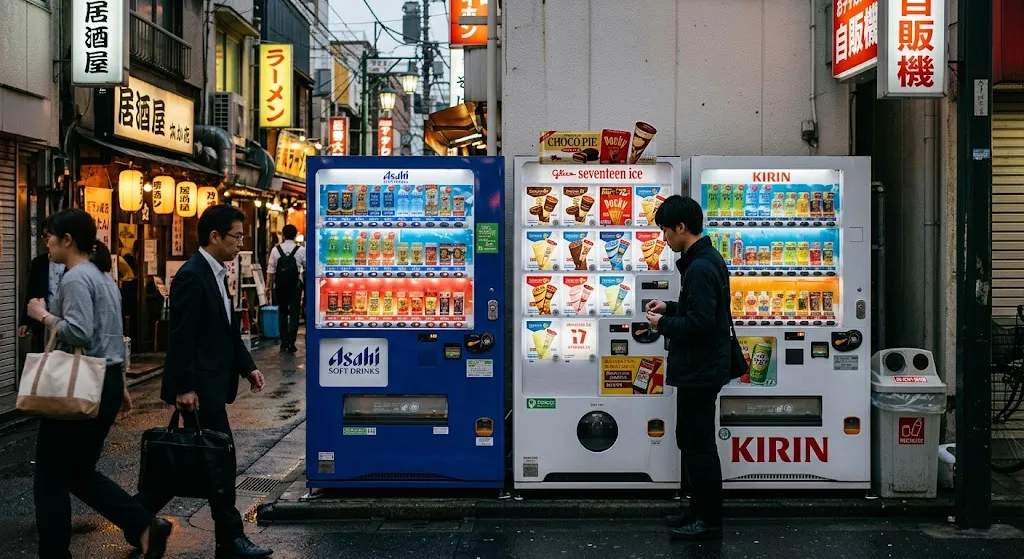
Unlike in many other countries, where vending machines are mainly found in shopping centers, schools, or office buildings, Japan has made them a normal part of everyday life. They sell far more than soft drinks and snacks, offering everything from hot coffee and tea to ice cream, fresh meals, umbrellas, and other useful items.
But why does Japan have so many vending machines? The answer involves a combination of history, technology, urban planning, consumer habits, and the country’s approach to convenience.
Key Takeaways
- Convenience drives popularity: Japanese vending machines provide quick access to drinks, snacks, and everyday essentials, often 24 hours a day.
- A history of innovation: Their popularity grew during Japan’s postwar economic expansion, supported by advances in refrigeration and automated retail.
- Technology improves efficiency: Modern machines may support cashless payments, remote monitoring, and efficient inventory management.
- Hot and cold drinks year-round: Machines adapt to Japan’s seasonal climate, offering chilled beverages in summer and warm drinks in winter.
- Urban and rural benefits: Vending machines serve busy city streets as well as rural areas where shops may be less accessible.
- More than beverages: Depending on the location, machines can sell prepared meals, ice cream, umbrellas, souvenirs, and regional specialties.
- Public trust matters: Community conditions, routine maintenance, and relatively secure public spaces help make outdoor vending machines practical.
- Challenges remain: Energy consumption, maintenance expenses, labor shortages, and competition from convenience stores influence the industry’s future.
A Country Built Around Convenience
One of the main reasons vending machines are so common in Japan is the importance placed on convenience. Japanese consumers are accustomed to services that are efficient, reliable, and available when needed.
In a country where many people commute long distances, work demanding schedules, and travel frequently by public transportation, quick access to drinks and snacks is valuable. A vending machine allows someone to buy a cold bottle of water, a can of coffee, or a refreshing tea without entering a shop or waiting in line.
Many machines operate around the clock, making them especially useful early in the morning, late at night, or during holidays when nearby businesses may be closed.
This convenience also fits naturally into Japan’s densely populated cities. People often walk between train stations, offices, shops, and residential neighborhoods, creating frequent opportunities for vending machines to serve customers throughout the day.
The History of Vending Machines in Japan
Vending machines have a long history in Japan, but their popularity grew significantly during the second half of the twentieth century.
Early machines sold items such as tobacco, sweets, and other small products. As Japan’s economy expanded after World War II, rising incomes, technological improvements, and changing consumer lifestyles created new opportunities for automated retail.
The introduction and widespread adoption of vending machines selling bottled and canned beverages helped transform the industry. Improvements in refrigeration and heating technology made it possible to offer cold drinks during the summer and hot beverages during colder months.
By the 1970s and 1980s, vending machines had become an increasingly familiar feature of Japanese streets and public spaces.
The country’s beverage industry also played a major role. Companies invested in extensive distribution networks, allowing machines to be stocked, maintained, and serviced efficiently. This infrastructure helped make vending machines commercially practical in locations where a conventional shop might not be profitable.
Over time, the machines became more than a novelty. They developed into an established part of Japan’s retail landscape.
A Strong Culture of Trust and Public Order
Another factor often associated with Japan’s vending machine culture is the relatively high level of public order and trust in many communities.
Vending machines are expensive pieces of equipment. They contain products, cash or electronic payment systems, and mechanical components that can be damaged or stolen. Operators need to feel confident that their investment will remain secure.
In many Japanese neighborhoods, vending machines can operate outdoors with comparatively limited physical protection. Their presence reflects a combination of local conditions, routine maintenance, community norms, and the practical management of public spaces.
However, it would be misleading to suggest that crime does not occur in Japan. Theft and vandalism happen, and operators still take precautions. Security measures, machine placement, and the surrounding environment all influence whether a particular location is suitable.
The important point is that vending machines can be integrated into everyday public spaces without requiring the staffing of a conventional store.
Why Japan’s Climate Helps Vending Machines Thrive
Japan experiences hot, humid summers and, in many regions, cold winters. These seasonal changes create demand for both chilled and heated beverages.
Many Japanese vending machines can sell cold drinks and hot drinks, sometimes from the same machine. During winter, customers can purchase warm canned coffee, tea, or other heated beverages. In summer, the same machines provide chilled water, sports drinks, and tea.
This flexibility increases their usefulness throughout the year.
Hot canned coffee, in particular, has become a familiar part of Japanese daily life. Commuters can buy a warm drink at a station or on their way to work without stopping at a café.
Because the machines can adapt to seasonal demand, they remain useful even as temperatures and consumer preferences change.
Small Shops, Dense Cities, and Limited Space

Japan’s urban environment also helps explain the popularity of vending machines.
In major cities such as Tokyo and Osaka, land is expensive, buildings are closely spaced, and retail businesses must compete for limited space. Opening a traditional shop requires premises, staff, utilities, inventory management, and regular operating expenses.
A vending machine occupies much less space and does not require a cashier to remain on-site throughout the day.
For property owners, vending machines can provide a practical way to use small areas that might otherwise remain empty. A narrow space beside a building, a parking lot, or the entrance to an apartment complex may be suitable for a machine.
For operators, a network of machines can also be managed by a delivery and maintenance team serving multiple locations.
Vending machines do not replace all conventional retail businesses. Shops offer broader selections, personal service, and products that require more complicated handling. Nevertheless, machines are particularly effective for standardized items that customers want to purchase quickly.
What Can You Buy From a Japanese Vending Machine?
Drinks remain the most familiar products, but Japanese vending machines offer a surprisingly broad range of goods.
1. Hot and Cold Beverages
Water, green tea, bottled tea, canned coffee, soft drinks, energy drinks, and seasonal beverages are widely available. Many machines clearly indicate whether a drink is hot or cold.
2. Ice Cream and Frozen Treats
Specialized machines sell ice cream, frozen desserts, and other chilled products, providing quick treats without requiring a visit to a supermarket.
3. Meals and Prepared Food
Depending on the location, machines may offer noodles, dumplings, packaged meals, bread, or other prepared foods. Some are refrigerated, while others include heating or cooking equipment.
4. Everyday Necessities
Some machines sell umbrellas, masks, toiletries, batteries, stationery, and other useful items. Their availability is especially convenient when nearby stores are closed.
5. Regional Specialties and Unusual Products
Depending on the area, visitors may find local food products, souvenirs, fresh produce, or specialty items. Some machines are designed to attract tourists as much as local residents.
Not every machine sells unusual products, and the selection varies considerably by region. The appeal lies partly in the fact that vending machines can be adapted to the needs of a particular location.
Technology Makes the System Efficient
Japan’s vending machine industry benefits from decades of experience in automated retail.
Modern machines may use electronic payment systems, contactless cards, mobile payments, inventory monitoring, and remote diagnostics. Depending on the model, operators can receive information that helps them determine when a machine needs restocking or maintenance.
These technologies make it easier to manage large networks of machines across a city or region.
Payment options also make purchasing quick. Although cash remains accepted by many machines, some support transit-related IC cards, credit cards, or mobile payment methods. Available options depend on the machine.
Another important advantage is standardization. Many machines sell products in familiar sizes and use straightforward interfaces, allowing customers to make purchases with little effort.
The technology itself is not the only reason for Japan’s vending machine culture. Successful operation also depends on reliable supply chains, suitable locations, regular maintenance, and enough customers to justify the cost.
Why Vending Machines Can Be Found in Rural Japan
One of the most surprising features of Japanese vending machines is their presence outside major cities.
In rural areas, distances between shops can be greater, public transportation may be less frequent, and some businesses may have limited opening hours. A vending machine can provide a convenient source of drinks or other basic products without requiring a full-time retail employee.
Some machines are placed along roads used by drivers, near farms, beside small community facilities, or close to tourist attractions.
However, not every rural location can support a vending machine. Operators must consider customer traffic, delivery costs, electricity, weather exposure, and the risk of vandalism. Machines in remote areas may need less frequent restocking or may sell only a limited selection of products.
Their presence illustrates how automated retail can serve different environments, from busy city centers to quieter communities.
Are Vending Machines Good for Japan’s Economy?
Vending machines contribute to Japan’s retail economy by creating sales opportunities for beverage producers, food manufacturers, logistics companies, equipment makers, and maintenance businesses.
They also allow companies to sell products in places where opening a staffed shop would be difficult or expensive.
For consumers, the principal benefit is convenience. For businesses, the advantage is the ability to reach customers beyond conventional retail locations.
Yet vending machines also have costs. They consume electricity, require transportation and servicing, and must be repaired or replaced over time. Refrigeration and heating can increase energy use, while delivery vehicles contribute to traffic and emissions.
As a result, the environmental value of vending machines depends on factors such as energy efficiency, how frequently they are serviced, the products they sell, and whether they are placed where customers genuinely need them.
Japan’s experience demonstrates that automation can make retail more accessible, but it still requires careful planning and efficient operations.
Do Vending Machines Help During Emergencies?

Japan regularly prepares for earthquakes, typhoons, heavy rain, and other natural disasters. Because vending machines are distributed throughout public spaces, some can play a useful supporting role in emergency preparedness.
Certain machines have disaster-response functions, such as providing drinks free of charge when an authorized emergency mode is activated. Others may be connected to local disaster-prevention agreements or operated in coordination with municipalities.
These arrangements can help make essential beverages available when normal commercial services are disrupted.
However, not every vending machine has emergency capabilities, and their availability depends on the individual machine, its operator, power supply, and local arrangements.
Vending machines should therefore be regarded as one possible element of emergency support rather than a replacement for official shelters, emergency supplies, or disaster-response services.
Why Other Countries Have Fewer Vending Machines
Vending machines exist throughout the world, but their concentration varies from country to country.
In some places, operators face higher risks of vandalism, greater servicing costs, or more complicated rules governing outdoor commercial equipment. In others, supermarkets, convenience stores, and staffed kiosks already provide easy access to inexpensive drinks and snacks.
Consumer habits also matter. If people generally prefer to purchase food and beverages from cafés or shops, the business case for installing large numbers of vending machines may be weaker.
Japan combines several favorable conditions: established beverage distribution networks, demand for convenient purchases, extensive pedestrian traffic in many areas, technological experience, and a retail culture that accommodates automated sales.
No single factor explains the difference. Instead, the country’s vending machine network has developed through the interaction of economics, infrastructure, and everyday consumer behavior.
The Future of Vending Machines in Japan
Japan’s vending machine industry faces new challenges, including rising operating costs, labor shortages, changing consumer habits, and concerns about energy consumption.
In response, operators can use more efficient refrigeration systems, improve inventory planning, introduce cashless payment options, and reconsider locations where machines receive too little use.
Some machines are also becoming more specialized, selling local products or serving particular settings such as hotels, offices, tourist attractions, and transportation hubs.
At the same time, convenience stores and online shopping remain strong competitors. A vending machine must offer enough value to justify its presence, whether through location, availability, speed, or a distinctive product selection.
The future is therefore unlikely to depend simply on installing more machines. It will depend on making existing networks more efficient and ensuring that each machine serves a genuine need.
Conclusion
Japan has so many vending machines because they fit remarkably well into the country’s everyday life. They provide quick access to drinks and other goods, operate for long hours, occupy little space, and can serve customers in both crowded cities and quieter rural communities.
Their success is supported by a mature distribution system, technological innovation, public infrastructure, and consumer demand for convenience. Cultural factors, including the management of public spaces and the conditions that allow outdoor machines to operate, also contribute.
What may appear to visitors to be an unusual national obsession is, in practice, a highly developed form of automated retail. Japan’s vending machines demonstrate how a simple idea can become an essential part of daily life when technology, business practices, and consumer needs work together.
For more interesting articles about history, technology, culture, and the world around us, visit serdpestcp.org.