
Supermarkets may seem like simple places to buy groceries, but their layouts are carefully planned to influence how customers move through the store, what they notice, and how much they spend. From the placement of everyday essentials to the arrangement of products at eye level, many details are designed to encourage shoppers to add more items to their baskets.
Understanding how supermarket design works can help consumers make more informed purchasing decisions, avoid unnecessary spending, and recognize the difference between genuine needs and products they buy on impulse.
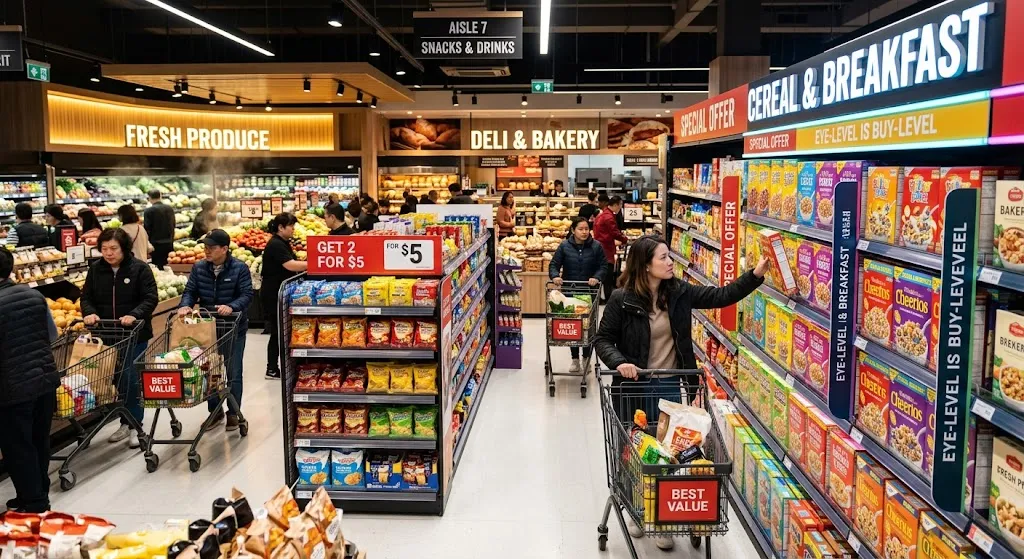
1. Why Supermarkets Place Essential Products at the Back
Have you ever entered a supermarket to buy milk, bread, or eggs and discovered that you needed to walk past dozens of other products to reach them?
This arrangement is often intentional. Supermarkets may place frequently purchased essentials toward the back or in different sections of the store, encouraging customers to pass other merchandise along the way.
During that walk, shoppers encounter snacks, household products, seasonal promotions, and other tempting items. Even when customers enter with a short shopping list, additional products can catch their attention.
The longer someone spends browsing, the more opportunities there are to make unplanned purchases. However, store layouts vary, and not every supermarket arranges essential products in the same way.
2. How Eye-Level Shelves Influence Purchasing Decisions
The position of a product on a shelf can significantly affect whether a customer notices it.
Supermarkets often give prominent shelf space to products they want shoppers to consider. Items placed at eye level are generally easier to see and reach, while cheaper alternatives or less heavily promoted products may be positioned on lower or higher shelves.
For example, a shopper comparing breakfast cereals might immediately notice a familiar brand displayed at eye level. A less expensive store-brand cereal on the bottom shelf may receive less attention, even if the products are similar.
Shelf placement can also be influenced by agreements between retailers and manufacturers, promotional campaigns, and expected sales.
Shopping tip: Compare products across the entire shelf rather than selecting the first item you notice. Checking the unit price, ingredients, and package size can reveal better-value alternatives.
3. Why Supermarkets Use Special Offers and Discounts
Bright promotional signs announcing discounts, limited-time offers, and multi-buy deals are common features of supermarket design.
These promotions appeal to shoppers because they create a sense of opportunity. A customer who sees a product marked as reduced may feel that buying it immediately is a smart financial decision.
However, a discount does not automatically mean that a purchase represents good value.
For example, buying three packages of biscuits instead of one may reduce the price per package, but the shopper still spends more money overall. If the extra products are unnecessary or eventually go to waste, the apparent saving may offer little real benefit.
Promotional pricing can also encourage customers to try unfamiliar products or switch brands.
Before taking advantage of an offer, consider whether you would have purchased the item at its regular price and whether you can realistically use the quantity being offered.
4. How Store Layout Encourages You to Keep Walking
Supermarket aisles, displays, and pathways influence how customers move through the shopping environment.
Some stores use layouts that encourage shoppers to explore multiple sections rather than heading directly toward the products on their lists. End-of-aisle displays, promotional stands, and products placed near intersections can introduce additional purchasing opportunities.
A shopper walking toward the dairy section might encounter a display of chocolate, coffee, or breakfast products. These items can suggest related purchases, even when the shopper had not planned to buy them.
Wide pathways and organized displays can also make browsing comfortable, allowing customers to spend more time inside the store.
Not every layout has the same objective, however. Supermarkets must also balance product visibility, customer convenience, accessibility, and efficient movement through the building.
5. Why Fresh Bread and Prepared Food Can Influence Shoppers
The smell of freshly baked bread, roasted food, or prepared meals can make a supermarket feel welcoming and encourage customers to think about eating.
Sensory experiences can influence shopping behavior because food aromas may stimulate appetite and make certain products more appealing.
A customer who enters a supermarket while hungry may find bakery items, ready-made meals, and snacks particularly difficult to resist. The smell of bread can also create an impression of freshness, especially when shoppers can see products being baked or displayed nearby.
Lighting, colors, food presentation, and background music can contribute to the overall atmosphere as well.
These features are not necessarily deceptive. Freshly prepared food can be a genuine benefit to customers, but an appealing shopping environment may also encourage purchases that were not originally planned.
Shopping tip: Eat before grocery shopping when possible, and keep your shopping list accessible so that appealing smells and displays do not distract you from your priorities.
6. How Product Placement Encourages Impulse Buying
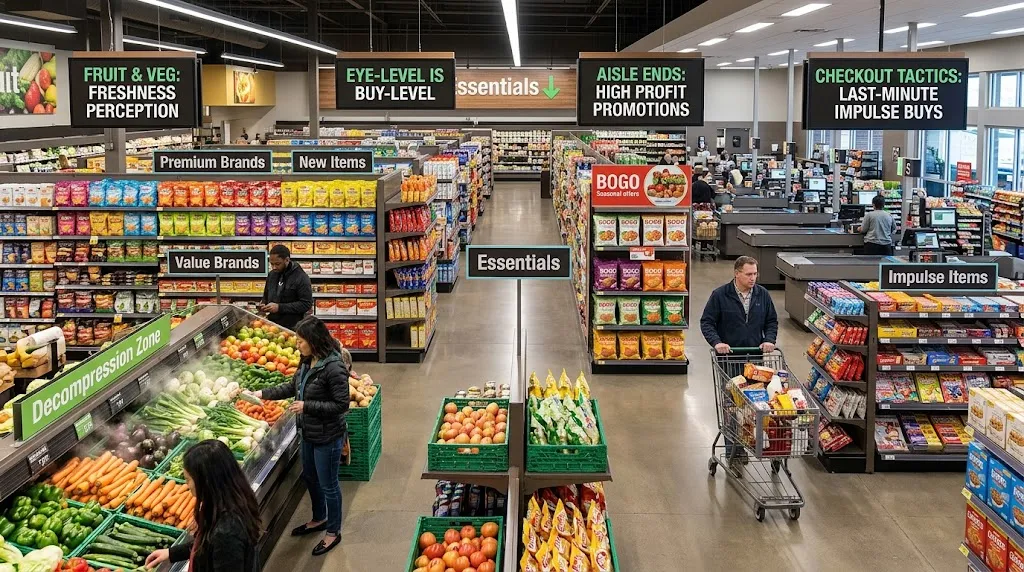
Some supermarket purchases happen because customers encounter an appealing product at precisely the moment they are likely to consider buying it.
Checkout areas are a familiar example. Small chocolates, chewing gum, batteries, and other inexpensive items are often displayed close to the payment point, where customers have time to notice them while waiting.
These products require little decision-making, and their relatively low individual prices can make them seem harmless. Adding several small purchases throughout a shopping trip, however, can noticeably increase the final bill.
Similar techniques appear elsewhere in the store. Seasonal displays may feature holiday sweets, summer refreshments, or special occasion products. Related goods may be placed together to encourage complementary purchases.
The underlying principle is simple: when a product is visible, accessible, and relevant to the shopper’s immediate situation, the likelihood of an unplanned purchase can increase.
7. Why Larger Shopping Carts Can Lead to Bigger Bills
Shopping carts and baskets are another part of the supermarket experience that can influence spending.
A large cart offers convenience when customers are buying groceries for a family or shopping for an entire week. At the same time, its capacity can make a modest amount of merchandise appear smaller than it really is.
When a cart still looks relatively empty, shoppers may feel that they have room for more products. This can encourage additional purchases without a clear assessment of whether those items are necessary.
The effect is not identical for every shopper, and cart size alone does not determine spending. Nevertheless, the way products occupy physical space can influence how customers perceive the quantity they have purchased.
Choosing a smaller basket for a short shopping trip can help some consumers remain focused on a limited list.
8. How Music, Lighting, and Color Shape the Shopping Experience
Supermarkets are designed to be functional, but they are also environments in which sensory details can affect customer behavior.
Lighting can make fresh produce look attractive, highlight product displays, and improve the appearance of packaged goods. Different colors help distinguish departments, communicate promotional messages, and draw attention to particular offers.
Background music can influence the atmosphere of a store. Depending on its tempo, volume, and the shopping context, music may affect how quickly customers move or how comfortable they feel while browsing.
These effects should not be exaggerated: music, lighting, and color do not control every customer’s decisions. Their influence depends on individual preferences, the type of store, and other circumstances.
Combined with product placement and promotions, however, environmental design can help create a shopping experience that encourages customers to remain in the store and explore additional merchandise.
9. Why Supermarkets Place Related Products Together
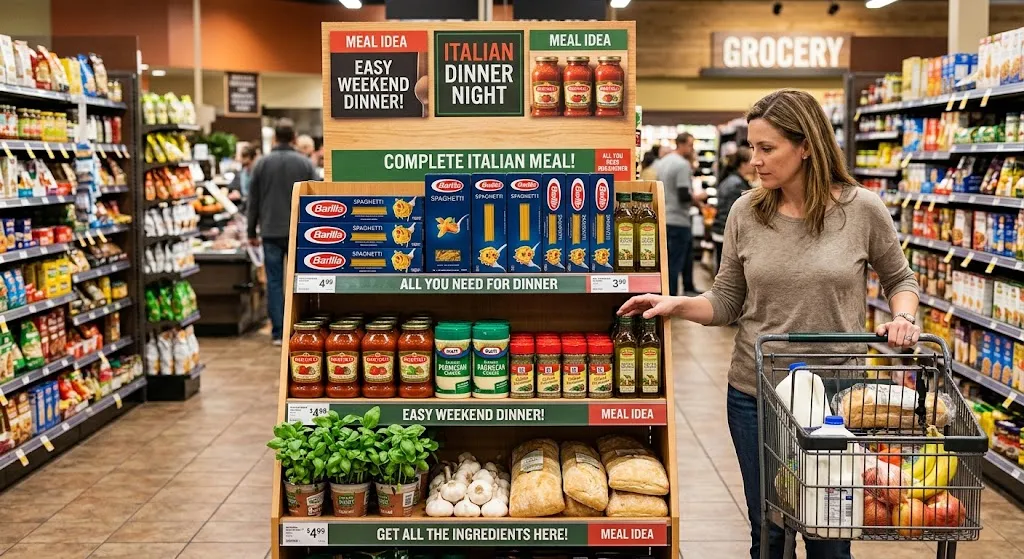
Product grouping makes shopping more convenient, but it can also increase the number of items customers purchase.
For example, a display featuring pasta, pasta sauce, grated cheese, and Italian seasoning suggests a complete meal. A barbecue section might combine meat marinades, sauces, disposable plates, and grilling accessories.
This approach helps shoppers discover products that work together. It can also remind them of items they had not planned to buy.
Cross-merchandising, as this practice is commonly known, connects products through a shared purpose or occasion. It is particularly effective when customers are planning meals, preparing for celebrations, or shopping for seasonal events.
To avoid unnecessary spending, consider which items you actually need for the meal or activity before purchasing an entire display’s selection.
10. How Loyalty Programs Encourage Repeat Purchases
Supermarket loyalty programs offer points, personalized discounts, member prices, and other benefits in exchange for repeat shopping or participation in a rewards scheme.
These programs can help customers save money, especially when discounts apply to products they regularly purchase. They also encourage shoppers to return to the same retailer rather than compare every available option.
Personalized promotions may highlight products based on previous purchases. For example, someone who frequently buys coffee may receive an offer for a particular coffee brand or a related product.
Although these offers can be useful, they may also encourage shoppers to purchase items simply because a discount is available. Rewards systems can make spending feel more rewarding even when the underlying purchase is unnecessary.
A practical approach is to use loyalty benefits selectively. Compare the final price, check the conditions of the offer, and avoid buying extra products solely to earn points.
11. How to Shop Without Falling for Unnecessary Purchases
Recognizing supermarket marketing techniques is the first step toward managing grocery expenses more effectively. Customers do not need to avoid promotions or ignore every attractive display. Instead, they can make deliberate decisions about what deserves a place in their shopping cart.
Several simple habits can help:
- Prepare a shopping list: Decide what you need before entering the store and use the list as your main guide.
- Set a budget: Establish a spending limit based on your household’s needs and available finances.
- Compare unit prices: Look at the cost per kilogram, litre, or individual unit rather than relying only on the package price.
- Check lower shelves: Less prominent products may offer better value than those displayed at eye level.
- Question multi-buy offers: Calculate whether buying a larger quantity genuinely saves money.
- Avoid shopping while hungry: This may help reduce the temptation to buy snacks and prepared foods you had not planned to purchase.
- Pause before impulse purchases: Ask yourself whether you need the item or simply noticed it because of its display or discount.
- Review your receipt: Identifying unexpected purchases can help you make better decisions on your next trip.
These habits allow consumers to benefit from supermarket convenience while remaining more aware of how their decisions are influenced.
Conclusion
Supermarkets are more than places where food and household products are sold. Their layouts, shelf arrangements, promotional displays, sensory environments, and loyalty programs all contribute to the way customers experience shopping.
Many of these features provide genuine convenience, helping shoppers find products, compare options, and discover new goods. At the same time, they can encourage impulse buying and increase the amount customers spend beyond their original intentions.
Understanding how supermarkets are designed to influence purchasing decisions gives consumers greater control over their choices. With a clear shopping list, an awareness of pricing strategies, and a willingness to compare alternatives, shoppers can make more informed decisions and focus their money on the products they genuinely need.



One thought on “How Supermarkets Are Designed to Make You Buy More”