
Have you ever wondered how people live in places where streets have no names and houses have no official addresses? In many parts of the world, communities rely on landmarks, local knowledge, geographic features, or modern GPS technology to identify where people live.
Finding a building is often as simple as reading a street sign and entering a number into a map. Streets have names, houses have numbers, and postal services can usually identify a location with a few words. Yet this system is far from universal. In some communities, neighborhoods, villages, and remote settlements, houses may have no formal street names or conventional street addresses at all.
At first, this can seem strange. How can people receive mail, emergency services, deliveries, or visitors if their homes do not have recognizable addresses? The answer is that communities have developed many different ways of identifying places, and the familiar street-address system is only one method.
Key Takeaways
- Not every community uses formal street names and house numbers.
- Remote villages often rely on landmarks, local knowledge, and geographic features to identify homes.
- Historic settlements may have irregular layouts that make conventional addressing difficult.
- Informal urban neighborhoods can develop before official street names and property numbers are established.
- Postal services may use post-office boxes, collection points, or local knowledge instead of home delivery.
- GPS and digital mapping now make it possible to locate places even when they have no traditional address.
- Formal addresses remain important for emergency services, government records, deliveries, and property administration.
- An address is ultimately a system for answering one basic question: Where is this place?
The Street Address Is a Relatively Modern Idea
The idea of assigning a name to a street and a number to every building developed gradually. In older settlements, people often did not need precise addresses because communities were small enough for residents to know where everyone lived.
A person might be identified as living near a church, a market, a river, a town gate, or another well-known landmark. A house could also be associated with a particular family or occupation. Instead of saying, for example, “24 Oak Street,” someone might simply say that they lived near the mill or next to a particular shop.
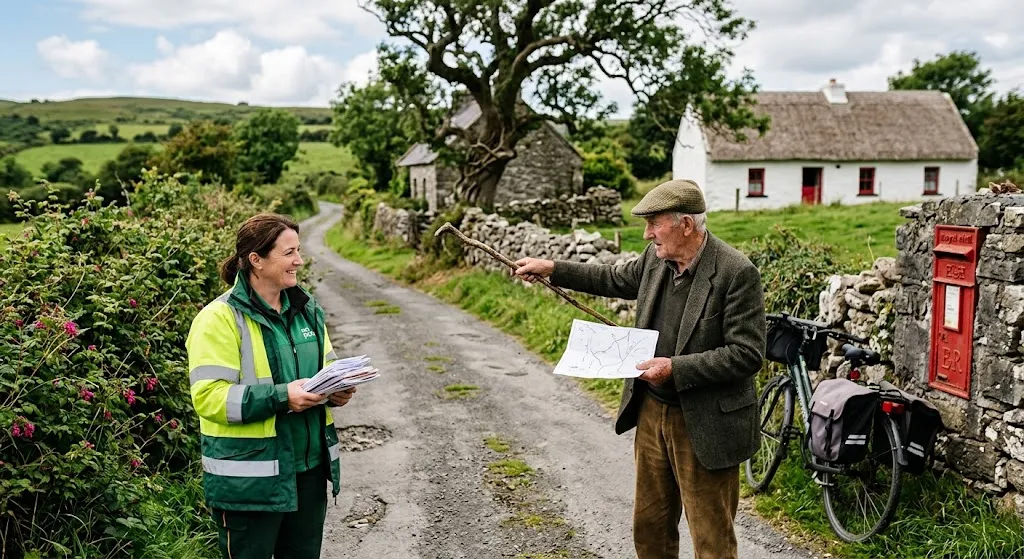
As cities grew larger and governments became more organized, standardized addresses became increasingly useful. Postal systems, taxation, property registration, policing, and urban planning all benefited from having a consistent way to identify individual buildings.
Some Communities Are Too Remote for Formal Addresses
One of the simplest reasons a place may have no street addresses is geography.
Remote villages can consist of scattered homes separated by fields, forests, mountains, or long stretches of unpaved roads. Creating an official street-name and numbering system may not be considered necessary, especially when there are relatively few residents.
In such places, local people may already know exactly where a house is located. Directions can be based on landmarks, neighboring families, rivers, hills, farms, or other features of the landscape.
A delivery driver unfamiliar with the area may find this system confusing, but for residents who have lived there for generations, it can work surprisingly well.
Rural Homes May Be Identified by Landmarks
In areas without formal addresses, landmarks often become part of the unofficial addressing system.
A home might be described as being “behind the old school,” “near the bridge,” “next to the large olive tree,” or “two kilometers past the village church.” These descriptions can be much more meaningful locally than an unfamiliar street name.
Natural features can also serve this purpose. Rivers, mountains, coastlines, valleys, and distinctive rocks may provide reliable reference points.
The system works because geographical knowledge is shared within the community. Someone may not know a street number, but they may immediately understand a description involving a particular landmark.
Traditional Settlements Were Not Always Designed Around Streets
Some older settlements developed organically rather than according to a planned grid.
Narrow lanes, irregular paths, courtyards, interconnected buildings, and winding passages can make conventional street numbering difficult. In historic districts, several buildings may even share entrances or have entrances that open onto small passages rather than recognizable streets.
In such environments, a modern address system may not fit the physical structure of the settlement very well.
This is particularly noticeable in some historic villages and old urban neighborhoods where the layout developed over centuries rather than being planned all at once.
Informal Settlements May Lack Official Addresses
Rapid urban growth can create another situation in which addresses are missing.
When large numbers of people move into cities faster than infrastructure can be developed, informal neighborhoods may appear before authorities have officially mapped and named every road.
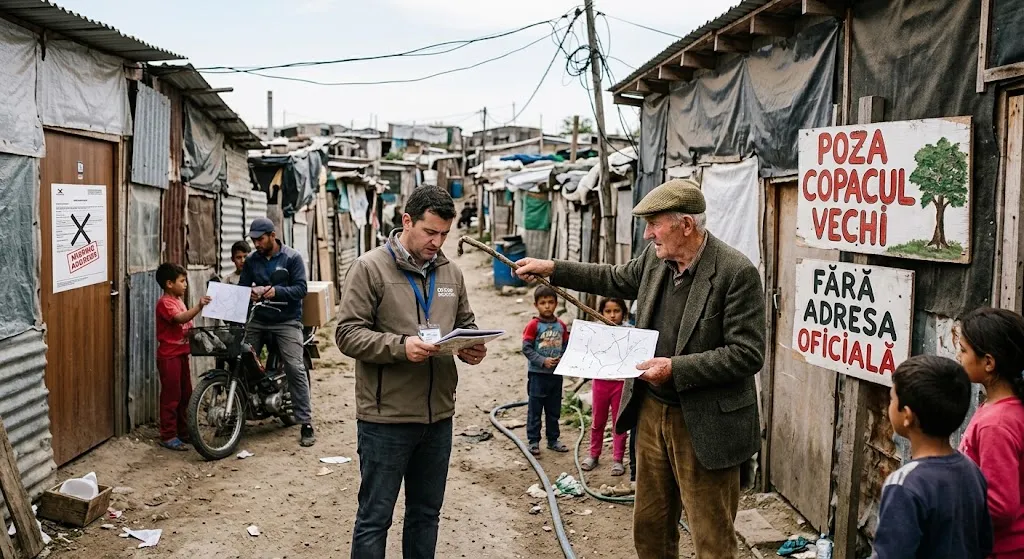
Houses may be built along unplanned paths or roads that do not yet have official names. Buildings may also change or expand over time without being incorporated into a formal addressing system.
For residents, the lack of an address can create practical difficulties. Receiving documents, registering a business, accessing government services, obtaining deliveries, or calling emergency services can become more complicated.
Some Places Use Descriptive Addresses Instead
Not having a traditional street address does not necessarily mean having no address at all.
Some countries and communities use descriptive addressing systems. Instead of identifying a property by a street name and number, the location may be described using nearby landmarks, administrative areas, village names, postal zones, or other geographic information.
A person might provide the name of a village, the name of a local area, and a description of where the house is located within that community.
These systems may look unusual to outsiders, but they can be perfectly functional when local residents and service providers understand the conventions.
How Technology Can Find Places Without Addresses
Modern technology has introduced additional ways of identifying places that do not have conventional addresses.
Digital mapping systems can locate a property using geographic coordinates rather than a street name and house number. GPS allows a device to identify a location based on latitude and longitude, even when there is no sign or address attached to the property.
Some systems have also created alternative methods of describing precise locations using short digital identifiers or other location codes.
This means that a house without a street number is no longer necessarily difficult to locate technologically. A smartphone can potentially guide someone directly to a geographical point.
Postal Services Have Developed Alternative Solutions
Mail delivery is one of the biggest reasons formal addresses became important. However, postal systems have developed different solutions for communities where conventional addresses are unavailable.
Mail may be delivered to a village post office, a post-office box, a local collection point, or a community center. In some places, residents may collect their mail rather than having it delivered directly to their homes.
In small communities, postal workers may also rely on their knowledge of local residents.
This is another example of how a system that appears inefficient from the outside can function effectively when the people using it understand the local geography.
Emergency Services Are a Major Challenge
The absence of formal addresses becomes much more serious when emergency services are involved.
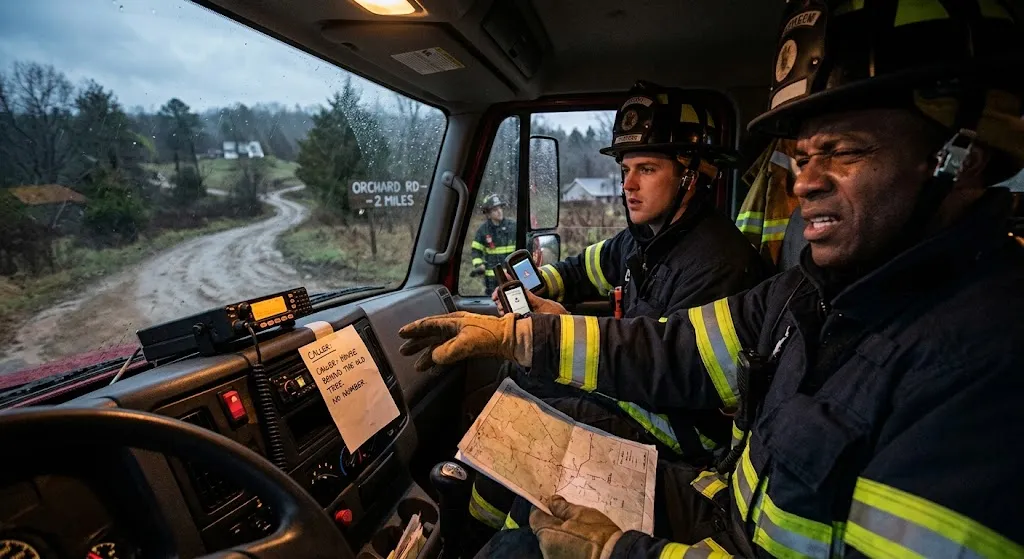
Firefighters, ambulances, and police officers need to locate people quickly. A description such as “the house behind the old tree” may be perfectly clear to a neighbor but much less useful to an emergency dispatcher unfamiliar with the area.
For this reason, many governments have gradually introduced geographic databases, road names, building numbers, GPS coordinates, and digital mapping systems even in rural areas.
In some communities, residents may be encouraged to provide coordinates or recognizable landmarks when contacting emergency services.
House Numbers Are Not Always Sequential
Even where streets have names and houses have numbers, numbering systems can vary considerably.
In some places, numbers increase consecutively along a street. In others, they may correspond to the distance from a particular starting point. Some systems use odd numbers on one side of a road and even numbers on the other.
Older neighborhoods can have irregular numbering because buildings were added, demolished, divided, or reconstructed over many decades.
As a result, even a place that appears to have a conventional addressing system may contain unusual gaps or numbers that do not seem to follow a simple pattern.
Addresses Can Reflect Local History
Street names and addresses often contain clues about the history of a community.
A street may be named after a historical figure, occupation, geographical feature, former village, important event, or local family. House numbers and property descriptions can also preserve traces of how a settlement developed.
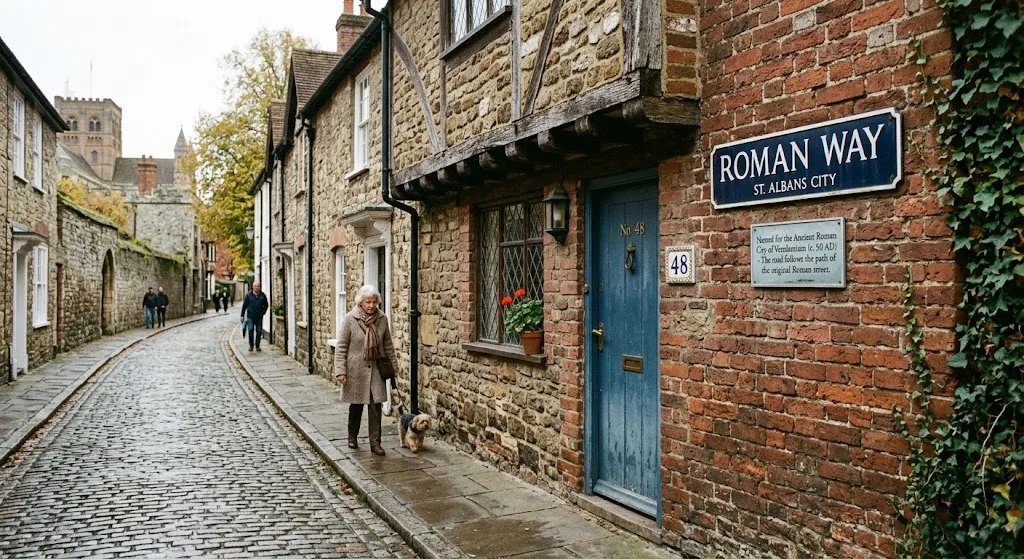
Where formal addresses are absent, local naming traditions can perform a similar historical function.
A road may be known informally by the name of the family that has lived there for generations, while an area may be identified by a historical landmark that no longer exists.
In this sense, an address is not merely a logistical tool. It can also be a small piece of cultural history.
Why Some Communities Prefer Local Systems
Formal addresses can bring major benefits, but introducing them is not always simple.
Authorities may need to survey properties, establish official boundaries, name roads, assign numbers, update maps, and create administrative records. In remote or economically disadvantaged areas, this can require considerable time and money.
There can also be cultural considerations. Residents who have always identified their homes through local names and landmarks may not immediately see a need for a new system.
For a small community, saying “the house beside the old church” may be faster and more meaningful than remembering an official street number.
The World Is Becoming Easier to Map
Digital mapping is gradually changing the meaning of an address.
In the past, finding a house generally required a street name, number, map, and local knowledge. Today, a smartphone can use GPS, satellite imagery, digital maps, and location databases to guide someone to a precise point.
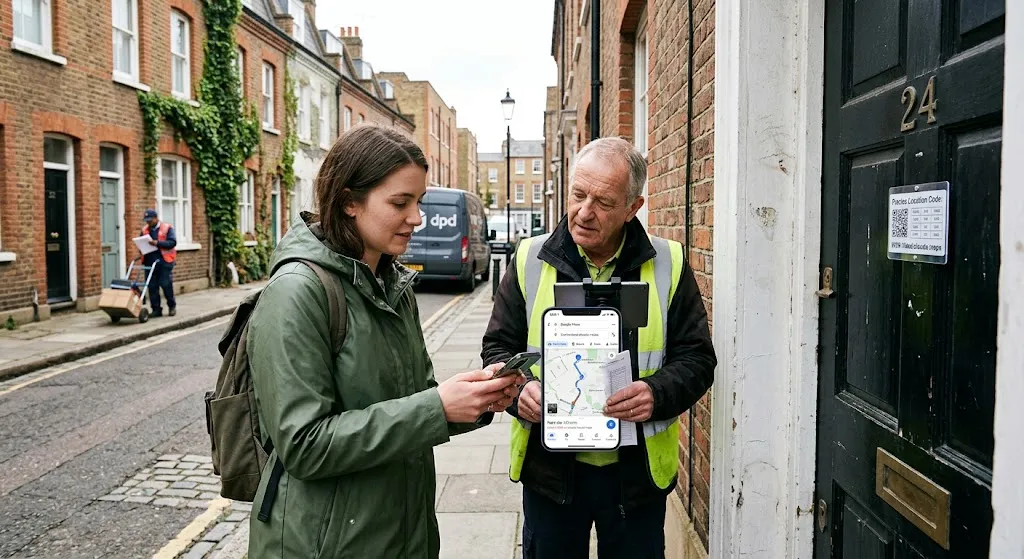
This does not make formal addresses unnecessary. Street names and numbers remain extremely useful for postal services, government records, property ownership, businesses, and emergency services.
But technology has created a second layer of location information that can exist independently of traditional addresses.
An Address Is Really a Way of Describing Place
At its simplest, an address answers one question: Where is this place?
Different societies have answered that question in different ways.
One community may use a street name and house number. Another may use a village name and a landmark. Another may rely on a postal box. Modern systems may use GPS coordinates or digital location codes.
The important thing is not necessarily the format. What matters is whether people can reliably identify the location.
Conclusion
Street names and house numbers may seem like a universal feature of modern life, but they are actually one particular solution to the problem of identifying places.
Remote geography, historic settlement patterns, informal urban development, local traditions, and economic conditions can all contribute to the absence of conventional addresses. In many such communities, people have developed their own systems based on landmarks, family names, villages, roads, postal points, or geographic coordinates.
As digital mapping becomes more sophisticated, the concept of an address is becoming broader. A place does not necessarily need a sign on a street corner or a number on a door to be precisely located.
Sometimes, a place can be found simply because a community knows its landscape well—and increasingly, because technology does too.
For more interesting articles, ideas, and insights on a wide range of topics, visit serdpestcp.org.
Frequently Asked Questions
Some communities are remote, very small, historically developed, or informally built, making formal street naming unnecessary or difficult.
They may use landmarks, nearby buildings, family names, village names, local directions, or GPS coordinates.
Yes. Mail may be sent to a post-office box, local collection point, village post office, or another designated location.
They may use landmarks, local directions, digital maps, GPS coordinates, or geographic databases to identify the location.
No. Addressing systems vary considerably between countries and communities, and some places use descriptive or alternative systems instead of conventional street numbers.
Yes. GPS identifies a geographic position using coordinates, so a location can be found even when it has no formal street name or house number.


2 thoughts on “Why Some Places Have No Street Names or Addresses”